10/28/2010

Russia calls on U.S. to probe human rights violations in Iraq


Russia calls on U.S. to probe human rights violations in Iraq, says Russian Foreign Ministry spokesman Andrei Nesterenko

October 28, 2010 (KATAKAMI / RIA NOVOSTI) --- Moscow has called on Washington to hold an investigation into mass human rights violations committed by U.S. servicemen during the military campaign in Iraq between 2004 and 2009, Russian Foreign Ministry spokesman Andrei Nesterenko said on Thursday.

Over 400,000 documents related to the U.S. military operation in Iraq were published on the whistleblower WikiLeaks website on Saturday. Some 1,500 other war logs will be published later.

"We call on the government of the United States to hold an investigation and hope that the results will be made public and the rights community and all interested international structures will be informed [of the results]," Nesterenko said in a statement on the website of the Foreign Ministry.

"Of course, information on the murders of civilians, torture and other degrading treatment of detainees which, according to the media, U.S. military commanders knew about, needs detailed investigation," Nesterenko said.

"This move will demonstrate the adherence of the United States to high standards in the sphere of human rights, which they [the United States] always call on other countries to maintain," Nesternko's statement read.

The move will also help the United States "pass a serious test" which the country will have to undergo soon under the United Nations Human Rights Council's Universal Periodic Review.

The Pentagon has repeatedly called on WikiLeaks to refrain from publishing war logs because, according to the U.S. administration, they threaten the safety of both servicemen and civilians in Iraq.

MOSCOW, October 28 (RIA Novosti)

Photostream : Funeral ceremony of Mbah Maridjan, the spiritual guardian of the Indonesian volcano Mount Merapi


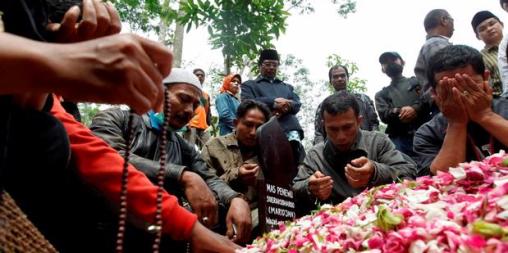
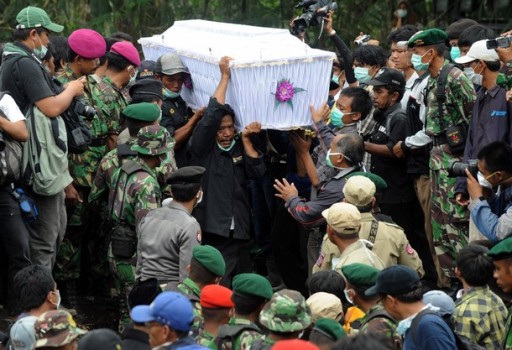
Residents pray at the tomb of the spiritual guardian of Mount Merapi, Mbah Maridjan already buried today in Srunen Hamlet, Village Glagaharjo, Cangkringan, Sleman, Yogyakarta, on Thursday (10/28/2010). Photo : KOMPAS IMAGES/KRISTIANTO PURNOMO

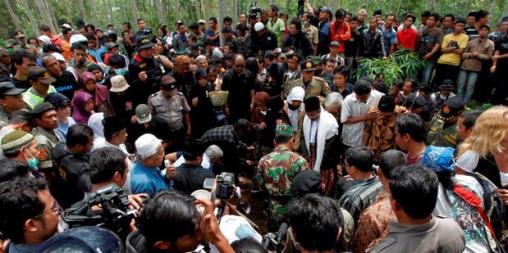
Thousands of mourners attended the funeral ceremony the spiritual guardian of Mount Merapi, Mbah Maridjan conducted on Thursday (10/28/2010) in Srunen Hamlet, Village Glagaharjo, Cangkringan, Sleman, Yogyakarta, on Thursday (10/28/2010). Photo : KOMPAS IMAGES

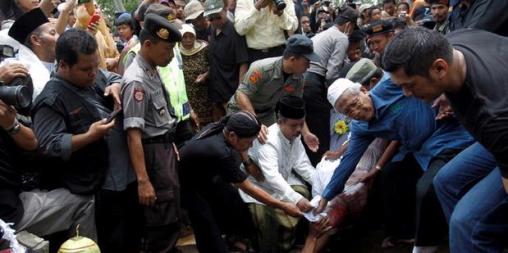
The bodies of Mbah Maridjan, the spiritual guardian of Mount Merapi is inserted into the grave. Mbah Maridjan already buried today in Srunen Hamlet, Village Glagaharjo, Cangkringan, Sleman, Yogyakarta, on Thursday (10/28/2010). Photo : KOMPAS IMAGES/KRISTIANTO PURNOMO

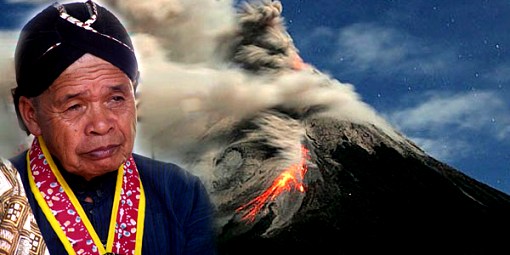
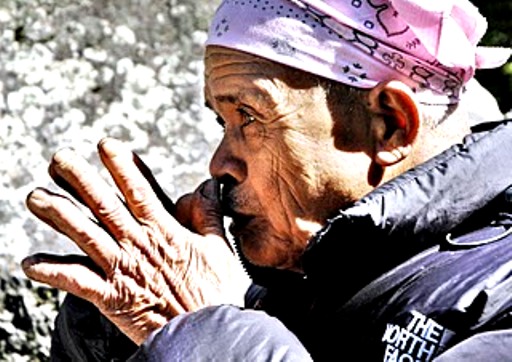
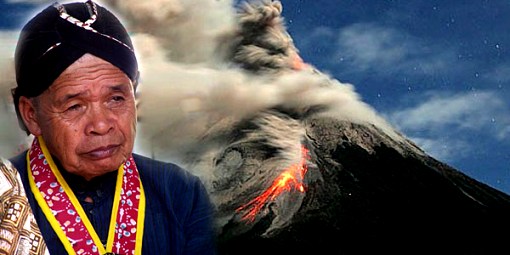
Mbah Maridjan ("Grandfather Maridjan") was the spiritual guardian of the Indonesian volcano Mount Merapi. He was killed at the age of 83 by a pyroclastic flow that hit the village of Kinahrejo during the 2010 eruption of Mount Merapi. Maridjan was the son of the previous guardian. He was appointed to the palace staff of the Sultan of Yogyakarta, Sri Sultan Hamengkubuwono IX, in 1970 and was given the title of Mas Penewu Suroksohargo. He replaced his father as gatekeeper in 1982

David Cameron admits defeat over EU budget


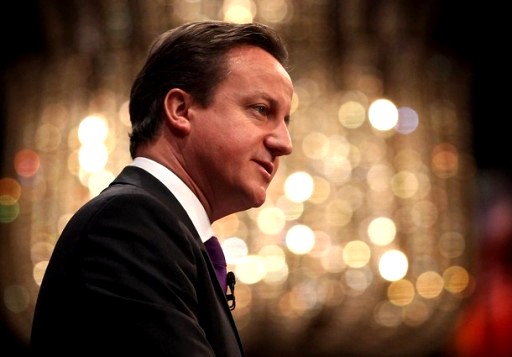
British Prime Minister David Cameron

• PM embarks on telephone effort to keep rise to minimum
• Summit will be dominated by German treaty demand


October 28, 2010 (KATAKAMI / GUARDIAN.CO.UK) --- David Cameron is planning to approve a £435m increase in Britain's contribution to the EU next year, prompting a row with the Tory right as he admits defeat in a battle to freeze Europe's budget.

As Eurosceptics in the party turned on the government in an emergency Commons debate on the EU, the prime minister told fellow European leaders ahead of today's summit in Brussels that he accepts the £107bn EU budget will have to increase by a minimum of 2.9%. This will take the budget to £110.2bn, with Britain contributing an extra £435.2m.

Cameron last night embarked on a diplomatic offensive by telephone to try to keep the rise to a minimum – and well below the 5.9% demanded by MEPs – at a time when many countries, including the UK, are cutting national spending.

The prime minister spoke to Angela Merkel, the German chancellor, Nicolas Sarkozy, the French president, and Herman van Rompuy, the president of the European council, about the budget, which is not on the formal agenda of today's summit but will dominate conversations on the sidelines and in meetings between government heads and officials.

David Lidington, the Europe minister, said today that the prime minister would be concentrating on trying to persuade fellow leaders of the importance of the budget issue. He told BBC Radio 4's Today programme: "What he's going to be focusing on is saying that whether it's 2011 or the more important long-term deal over the European budget, this is really something that deserves the highest priority among the leaders of all member states."

The European council has already agreed in principle a 2.9% increase, however, and British officials acknowledge that that is the minimum by which it will rise. The final figure is likely to be somewhere between 2.9% and the MEPs' preferred 5.9% and will set a baseline for the longer-term "financial perspective" which will determine the budget between 2014 and 2020.

"We are gearing up for the financial perspectives," one source said of the negotiations at which Britain's EU budget rebate will be on the table. In these negotiations Britain has a veto, unlike the annual budget negotiations, which are decided by qualified majority voting.

Cameron is trying to assemble a bloc of European leaders who can head off the MEPs' demands and ensure that the financial perspective is kept down. He also spoke to Fredrik Reinfeldt, the Swedish prime minister, and Yves Leterme, his Belgian counterpart, last night.

A Downing Street spokesman said: "In all of his calls, he set out the case for fiscal discipline in the EU budget. Many countries across Europe had engaged in challenging national programmes to cut spending and rein in budget deficits. The eurozone itself had been working on new arrangements for ensuring individual members of the eurozone managed their public finances responsibly.

"Now the EU as a whole needed to show that it would make its contribution too. This meant agreeing the lowest possible EU budget for 2011, and demonstrating real restraint as we approached negotiations on the next financial perspective."

Even accepting the 2.9% budget increase will anger Tory Eurosceptics who have been urging the government to fight for a freeze or a cut.

Labour has accused the Tories of failing to "stand up for the British interest". Wayne David, the shadow Europe minister, said: "In government Labour argued strongly for a freeze in this year's European Union budget, and Labour MEPs voted against the increase in the European parliament. The Conservatives have talked tough on this issue but they haven't got a result. Instead they have entered government isolated, and failed to stand up for the British interest in their first budget test. The Tories are desperate to not talk about Europe, but their failure to speak up is costing Britain."

The concession over the budget represents a blow for Cameron, who said as recently as last week that he wanted to see the sum cut, or at least frozen, as Europe plays its part in reducing costs during a period of fiscal austerity.

Today's summit will be dominated by German demands for a new EU treaty. Merkel is facing a backlash from small EU states over her demand that the €110bn bailout for Greece and the wider €750bn bailout fund for others must be placed on a legally watertight basis.

Cameron, who had hoped that the EU would not need to undergo treaty change for another decade, is expected to tell the German chancellor that Britain will find it easier to support her demands if the budget is trimmed.

One British government official commented: "Treaty change is not where we would want to be at this time, but we will see what happens [at the summit]. We would not go along with any changes which would amount to a transfer of more powers to Brussels, but eurozone economic sanctions do not apply to us.
"On the other hand, 40% of our exports are to the eurozone member states and it is important to us that there is economic stability in the eurozone so we support whatever measures are necessary [to maintain stability]."

Lidington said this morning: "It's very far from clear there is a consensus even with the eurozone countries for a treaty change. We are not going to sign up to any treaty change that transfers powers from the United Kingdom to Brussels institutions."

Yesterday Mark Hoban, the financial secretary to the Treasury, also made this point, telling the Commons: "We will not agree to any changes to EU treaties that would move more powers from this country to the EU. The UK's exemption from the sanctions proposal will be explicit. There will be no shift in sovereignty from Westminster to Brussels."

No 10 was given a taste of the perils of EU negotiations yesterday when a host of Eurosceptic Tories stood up during the Commons emergency debate to denounce the proposed budget increase and the German demands for treaty change.

Peter Lilley, the former cabinet minister famously denounced by John Major as a Eurosceptic "bastard", said Cameron should demand concessions as the price for agreeing to a treaty change. In a question Lilley said: "Can he assure me that we will not give that support without demanding a price? This is the ideal opportunity to obtain that price."

In First, British Spy Chief Goes Public


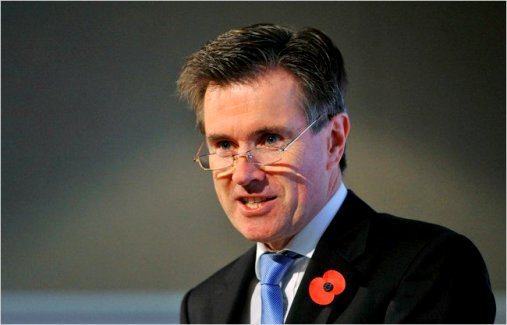
Sir John Sawers giving a live televised address in London on Thursday.

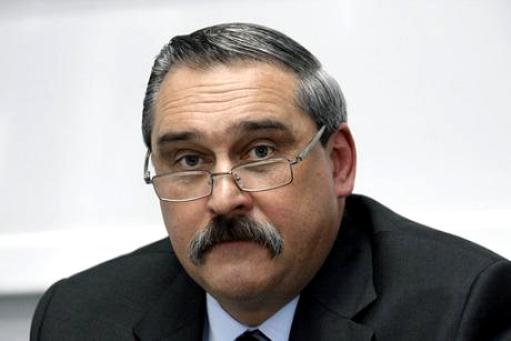
October 28, 2010. LONDON (KATAKAMI / NYTimes) — At an appropriately hush-hush venue, before a not-so-hush-hush audience of newspaper editors and television cameras, the chief of Britain’s Secret Intelligence Service, on Thursday made the first public appearance by a serving chief of the agency, known as MI6, in its 101-year history.

Sir John Sawers took over the agency after the retirement of his predecessor late last year. Previously he had been a high-profile diplomat, serving as Britain’s ambassador to the United Nations and in other posts.
Sir John “will step out of the shadows today to make an unprecedented public intervention,” the Press Association news agency said, noting that his host, the Society of Editors, had requested that the venue for his speech not be made public. His appearance extended a trend among Britain’s spy bosses to shed the traditional cloak of their trade.

“Wherever possible the public should be told what is being done in their name. The default switch should be set to release information unless there is an extremely good reason for withholding it,” said Bob Satchwell, the head of the Society of Editors.

“We are glad to provide a platform that will encourage greater openness which will help to build confidence and respect for our intelligence services in their vital work in protecting national security.”
“Why now, might you ask?” Sir John said. The answer, he said, was that despite its prominence in the news, the debate about MI6 was not well-informed and “in today’s open society, no government institution is given the benefit of the doubt all the time.”

The organization traces its history to a decision by defense planners in 1909 to create a Secret Service Bureau. The body evolved through two world wars and the Cold War, feeding the plot lines and character lists of spy thrillers from James Bond to George Smiley. But for decades, the identity of its chief — known only as C, according to the Press Association — was the biggest secret of all.

Despite the nature of Sir John’s job, said Frank Gardner, the BBC’s security correspondent, “this is someone who loves the limelight.”

MI6 focuses on overseas operation while its domestic counterpart, MI5, is responsible for domestic security.

Even before his appointment, Sir John seemed to offer something a break with tradition, shown in Facebook photographs having fun in a park, wearing a red fleece and a Santa Claus hat and playing Frisbee on a beach.

The photographs were posted by Sir John’s wife, Shelley, who had chronicled the activities of her family and friends on the Facebook page, whose existence was disclosed by the tabloid Mail on Sunday.

Sir John’s appearance followed a first public speech by Iain Lobban, the director of Britain’s electronic eavesdropping agency, and several appearances by Jonathan Evans, the director general of MI5.

While he has not spoken publicly until Thursday about the work of MI6, he made two public appearances to give evidence at an official inquiry into the Iraq war about earlier assignments as a foreign policy adviser to former Prime Minister Tony Blair and as the British representative in Baghdad.

Photostream : Indonesia Holds Mass Burial for Volcano Victims


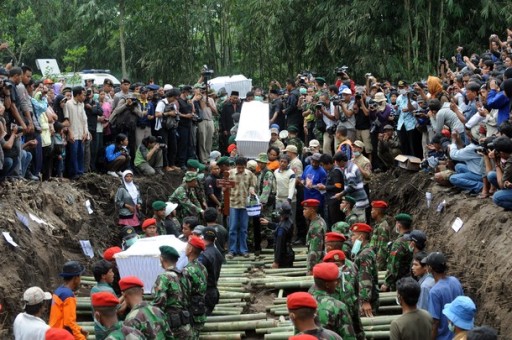
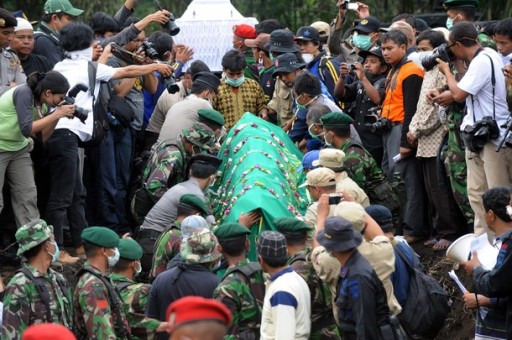
Residents, Indonesian soldiers and police hold a mass funeral for victims of the Mount Merapi eruption in Sidorejo, Sleman, in Central Java on October 28, 2010. Disaster-prone Indonesia paused on October 28 to bury victims of Mount Merapi's violent eruption, including an elderly spiritual leader appointed to hush the volcano's restless spirits. More than 20 of the 32 victims were buried in a mass grave as the country reels from the twin disasters of the eruption and a tsunami which struck Sumatra island on October 25, killing more than 300 people. (ADEK BERRY/AFP/Getty Images)

Residents, Indonesian soldiers and police hold a mass funeral for victims of the Mount Merapi eruption in Sidorejo, Sleman, in Central Java on October 28, 2010. Disaster-prone Indonesia paused on October 28 to bury victims of Mount Merapi's violent eruption, including an elderly spiritual leader appointed to hush the volcano's restless spirits. More than 20 of the 32 victims were buried in a mass grave as the country reels from the twin disasters of the eruption and a tsunami which struck Sumatra island on October 25, killing more than 300 people. (ADEK BERRY/AFP/Getty Images)

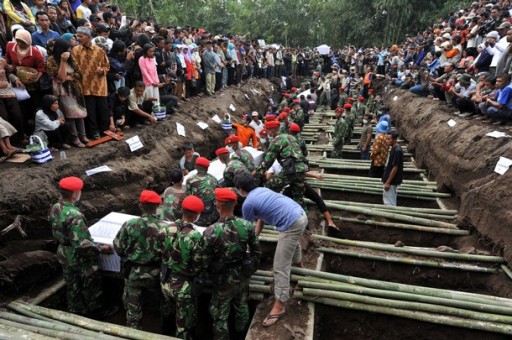
Poll bearers carry the coffin of a victim of the Mount Merapi eruption as residents, Indonesian soldiers and police hold a mass funeral in Sidorejo, Sleman, in Central Java on October 28, 2010. Disaster-prone Indonesia paused on October 28 to bury victims of Mount Merapi's violent eruption, including an elderly spiritual leader appointed to hush the volcano's restless spirits. More than 20 of the 32 victims were buried in a mass grave as the country reels from the twin disasters of the eruption and a tsunami which struck Sumatra island on October 25, killing more than 300 people. (ADEK BERRY/AFP/Getty Images)

Residents, Indonesian soldiers and police lift coffins as they hold a mass funeral for victims of the Mount Merapi eruption in Sidorejo, Sleman, in Central Java on October 28, 2010. Disaster-prone Indonesia paused on October 28 to bury victims of Mount Merapi's violent eruption, including an elderly spiritual leader appointed to hush the volcano's restless spirits. More than 20 of the 32 victims were buried in a mass grave as the country reels from the twin disasters of the eruption and a tsunami which struck Sumatra island on October 25, killing more than 300 people. (ADEK BERRY/AFP/Getty Images)

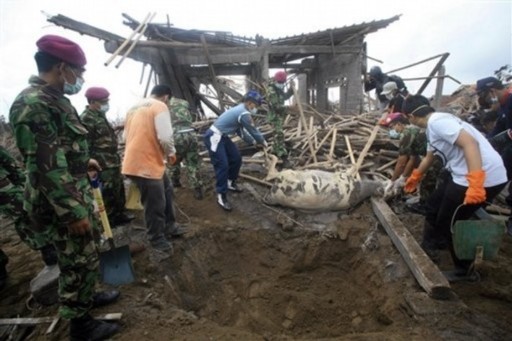
Indonesian marines and volunteers burry the carcass of a cow killed in Mount Merapi eruption in Kinahrejo village, Yogyakarta, Indonesia, Thursday, Oct. 28, 2010. (Getty Images / AP Photo/Binsar Bakkara)

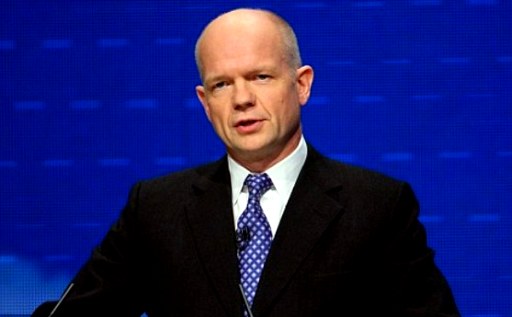
UK Foreign Secretary William Hague : Making progress in Afghanistan is the top foreign policy priority for the Government


Britain's Foreign Secretary William Hague

October 28, 2010 (KATAKAMI / UK EMBASSY IN INDONESIA) --- Foreign Secretary William Hague said that it "remains vital to our national security that Afghanistan be able to maintain its own security to prevent al-Qaeda from returning".

In his quarterly report on Afghanistan to the House of Commons, the Foreign Secretary said:

"With permission Mr Speaker, I will report to the House the Government’s assessment of progress towards UK objectives in Afghanistan. This is the first of the quarterly reports that the Prime Minister announced in his statement to the House on 14 June.

Making progress in Afghanistan is the top foreign policy priority for the Government, linked closely of course to our foreign and development policy towards Pakistan.

It is right, therefore, that Parliament is able to scrutinise the mission in Afghanistan in detail. From the beginning of the new Government we have given full attention to Afghanistan in the National Security Council. We have ensured that Government Departments and Ministers are working together at the highest level and that the necessary resources are being devoted to this difficult task in Afghanistan. We have doubled the operational allowance for our troops, sharply increased our development aid and rebalanced the deployment of our forces in Helmand.  In addition to these reports and regular updates by Ministers, we will also make more information available to the House in the form of Written Ministerial Statements each month from November.

And I will make a further statement when the investigation into the tragic death of Linda Norgrove is complete.

Members on all sides Mr Speaker will join me in expressing gratitude to our courageous Armed Forces. They are the finest any nation could hope to have. We should also remember the families of the 341 men and women who have given their lives and the many who have been wounded. For nine years thousands of Britons have served in Afghanistan in both civilian and military roles in extraordinarily difficult circumstances, and we owe them a great deal.

It remains vital to our national security that Afghanistan be able to maintain its own security and to prevent al-Qaeda from returning.  NATO’s strategy is to protect the civilian population, support more effective government at every level and build up the Afghan National Security Forces as rapidly as is possible. It also requires the Afghan Government to meet the commitments on governance and security that it made at the Kabul Conference in July this year.  My report today will cover all these areas. It represents the combined assessment of the FCO, MoD and DfID and the next Quarterly Report will be delivered by the Secretary of State for Defence in the New Year.

On security, we assess that steady progress is being made across Afghanistan and specifically in Helmand and Kandahar Provinces. International forces now number 130,000 while the Afghan National Security Forces will reach 260,000 by the end of the year, exceeding their target size for 2010. Afghan and ISAF forces have checked the momentum of the insurgency and the area under the control of the Government of Afghanistan is increasing. However the situation remains extremely challenging.  One of the effects of increased military activity is that the number of security incidents, particularly those involving direct fire, has increased sharply. So we should not underestimate the highly difficult task our forces continue to face.

ISAF’s military effort is currently focused on Kandahar. Afghan and international forces continue to clear the insurgency out of areas adjacent to the provincial capital. Afghan Security Forces are taking an increased role in planning and executing the current phase of these operations and make up well over half the forces involved. In the coming weeks operations will focus on holding the ground that has been gained and providing a secure environment for local Afghan governance to develop.

In Helmand province UK forces continue to train the Afghan National Security Forces and conduct operations against the insurgency.  As my Rt Hon Friend the Secretary of State for Defence announced on 14 October, we are increasing the number of UK troops directly involved in the training and development of the Afghan National Security Forces by over 320.  This increase is part of the rebalancing of UK forces in the province and has been made possible by the handover of security responsibility for Kajaki, Musa Qala and Sangin to our US allies, in order to concentrate British forces in the key population centres of central Helmand.


On 17 October units of the 3rd Brigade of the Afghan National Army’s 215 Corps launched a significant operation to secure settlements near Gereshk.  This Operation is building on the success of previous Afghan National Security Forces operations which have cleared the insurgency out of former safe havens in central Helmand over the course of the summer.  Planning and implementation is being led by the Afghans with British mentors from 1st Battalion Irish Guards providing support.  For the first time, Engineering, Artillery, Countering Improvised Explosive Devices and Reconnaissance are being conducted by the Afghan National Army itself.

US Marines, which now form the majority of the ISAF troops in Helmand, continue the hard fought struggle against the insurgency in Sangin while in Marjah they have continued to carry out operations alongside the Afghan National Army and Police.

The Government is confident that we have the right military strategy in place and the right number of troops in Afghanistan. However we must expect levels of violence to remain high, and even increase, as Afghan and ISAF forces tackle the insurgency.  The murders by insurgents of the Governor of Kunduz Province and a District Governor in Nangahar Province reminds us of the violence that still exists, even in the more secure areas of the country.

The Prime Minister will attend the NATO Summit in Lisbon on 19 November, when we expect NATO to agree the process of transferring lead responsibility for security across Afghanistan to the Afghan Security Forces by the end of 2014.  It will be a phased transition with the Afghan Security Forces gradually taking the lead, as they have in Kabul, in jointly selected districts and provinces, as the conditions on the ground are met. British forces will be drawn down from combat operations by 2015.
On governance we assess that the Government of Afghanistan is making some progress on its Kabul Conference commitments.  The Human Rights Support Unit in the Ministry of Justice has been opened. The Afghan National Security Adviser has approved a revised National Security Policy.  The Government is finalising a 100 day report which will highlight progress and areas where further action is needed.  But more still needs to be done, some of it more quickly.

Last month’s Parliamentary Elections passed without serious security incident. However the Independent Electoral Commission has confirmed that over a million votes – almost a quarter of the total – were disqualified on grounds of irregularities and fraud. The Electoral Complaints Commission will investigate allegations against candidates and disqualify those found to have committed fraud before final results are issued. This is an important process to build Afghan confidence in their country’s institutions.

On 7 October the High Peace Council was inaugurated, fulfilling a key request of the Afghan Consultative Peace Jirga in June.  It marks an important milestone for the Afghan Peace and Re-integration Programme. It is for the Afghan people to shape a political settlement which reflects the needs, culture and aspirations of all the Afghan people. The United Kingdom will support a settlement which gives Afghanistan stability and security; is representative; gives no one group disproportionate influence; upholds human rights and the rule of law and is in accordance with Afghanistan’s Constitutional framework.  The UK will work with individuals and groups who genuinely share these aims and who accept the conditions laid down by President Karzai’s Government: insurgents must renounce Al Qaeda, give up armed struggle and work within the Afghan Constitutional framework. We consider, on its merits, any request for the UK to play a role in support of this Afghan-led process.

At the same time ISAF will continue to exert intensifying pressure on the insurgency throughout the country.

Corruption continues to be a serious problem in Afghanistan and there has been only modest progress in anti-corruption efforts. In the last year the Criminal Justice Task Force convicted 440 people including serious narcotics dealers and corrupt officials. New mining regulations have been introduced to increase transparency and accountability. The UK is helping the Afghan Government to strengthen accountability and prevent corruption through financial management reforms and to build institutions with the ability to tackle corruption and enforce the rule of law. We are pressing for the anti-corruption Monitoring and Evaluation Committee, which has been appointed, to start work as soon as possible.

In early September Afghanistan's Central Bank was forced to intervene to stabilise the Kabul Bank after allegations of corruption. The Afghan authorities must now work with the IMF to conduct a proper audit and take any necessary action. Weaknesses in the banking regulatory system must be addressed if Afghanistan is to maintain domestic and foreign public confidence.

The Afghan economy grew last year by a rapid 22.5% and tax revenues have risen six fold in six years. The IMF predicts that the Government of Afghanistan will be able to cover non security running costs by 2015 and all its running costs by 2023.

The House will recall that, on 21 July, Development Secretary announced a £200 million increase in UK funding for Afghanistan to stabilise insecure areas, stimulate the economy and improve essential services. Early progress is being made at the Ministry of the Interior where the new Minister is keen to develop a more capable and accountable police force which will help sustain the transition of security responsibilities to the Afghan Government.

Mr Speaker, the deployment of British Armed Forces abroad is one of the gravest of responsibilities of Government, along with that of protecting the security of British citizens and territory. In Afghanistan the two go hand in hand. The Government understands how important it is to retain public confidence in our mission and to ensure democratic scrutiny of it. We will continue to provide regular and frank assessments to the House. But above all we will do our utmost to ensure that NATO’s strategy in Afghanistan is seen through with rigour and determination and that the extraordinary efforts of so many thousands of our Armed Forces serve to enhance the national security of the United Kingdom."
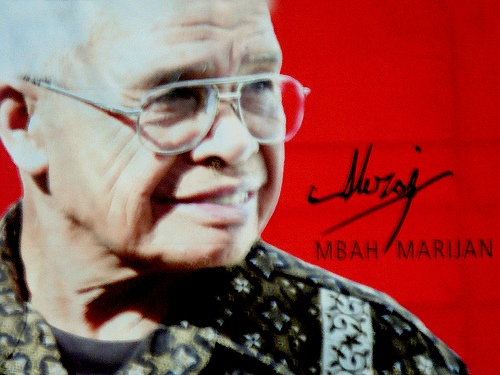
Mbah Maridjan, Mount Merapi guardian buried on its slope


Mbah Maridjan ("Grandfather Maridjan") was the spiritual guardian of the Indonesian volcano Mount Merapi. He was killed at the age of 83 by a pyroclastic flow that hit the village of Kinahrejo during the 2010 eruption of Mount Merapi. Maridjan was the son of the previous guardian. He was appointed to the palace staff of the Sultan of Yogyakarta, Sri Sultan Hamengkubuwono IX, in 1970 and was given the title of Mas Penewu Suroksohargo. He replaced his father as gatekeeper in 1982

October 28, 2010 (KATAKAMI / THE JAKARTA POST) --- Mbah Maridjan, the caretaker of Mount Merapi who died after refusing to abandon his ceremonial post when the volcano erupted Tuesday, was buried around noon Thursday  in Srunen hamlet, in Cangkringan, Yogyakarta.

Hundreds of relatives and local people were present at the funeral.

The funeral was also attended by Yogyakarta Governor and Sultan of Yogyakarta Hamengkubuwono X first daughter Gusti Pembayun and former President Abdurrahman “Gus Dur” Wahid” daugther Alissa Wahid.

Maridjan, 83, had been entrusted by the highly respected late Sultan Hamengkubuwono IX to watch over the volcano's spirits. For years he led ceremonies in which rice and flowers were thrown into the crater to appease its spirits. Maridjan had angered officials in the past by refusing to evacuate during Merapi’s eruptions.

“[His refusal to evacuate] was because of his responsibility as caretaker of Mount Merapi,” Hamengkubuwono said Wednesday.

Maridjan was among tens of people killed by hot ash spewed by Merapi on Tuesday in Kinahrejo hamlet, where he was born in 1927, which is located 4 kilometers from the volcano.

Famous for his convictions about his position, Maridjan was reportedly found in a praying position, kneeling facedown on the floor.

Death Toll From Mount Merapi Eruption Hits 30


Mbah Maridjan ("Grandfather Maridjan") was the spiritual guardian of the Indonesian volcano Mount Merapi. He was killed at the age of 83 by a pyroclastic flow that hit the village of Kinahrejo during the 2010 eruption of Mount Merapi. Maridjan was the son of the previous guardian. He was appointed to the palace staff of the Sultan of Yogyakarta, Sri Sultan Hamengkubuwono IX, in 1970 and was given the title of Mas Penewu Suroksohargo. He replaced his father as gatekeeper in 1982

October 28, 2010. Yogyakarta (KATAKAMI / THE JAKARTA GLOBE) ---  The death toll from Mount Merapi’s eruption climbed to 30 on Wednesday, despite all the preparations and warnings.

“Twenty-seven of them died instantly when Merapi erupted, the other three in the emergency unit of Sardjito Hospital,” hospital spokesman Trisno Heru Nugroho said.

An official with the police identification unit, Rizal, said most of the victims suffered from severe burns.

Tutik, in her early 20s, came to Sardjito Hospital with her husband to claim the body of her grandmother, Mbah Pujo, who died in her home in Kinahrejo village.

“My grandmother died during the eruption and I just found out that her body was brought here,” she said.

Kinahrejo, the village closest to Merapi’s crater, was also home to the mountain’s spiritual gatekeeper, Mbah Maridjan, whose body was found in his home on Wednesday morning.

“It was catastrophic. Most of the houses were severely damaged and the whole village was covered by volcanic ash,” said Krista Martana, a volunteer from Disaster Alert Youth.

“The temperature was unbelievably hot. I got blisters on my feet even though I was wearing shoes with thick soles.”

Inside Mbah Maridjan’s house, 13 other bodies were also found.

The victims had been trying to convince him to leave just before the volcano erupted on Tuesday afternoon.

Among them were Yuniawan Nugroho, 42, also known as Wawan, the head of the political desk at news portal Vivanews, and Tutur Priyatno, 36, a volunteer of the Yogyakarta branch of the Indonesian Red Cross.

Officials identified them from identity cards in their pockets.

One of Wawan’s colleagues, Kinaransih, said she last saw him when he landed in Yogyakarta on Tuesday evening.

“He later sent me an SMS saying that he had met Mbah Maridjan and that he was waiting for Mbah Maridjan to finish praying. He was trying to persuade him to evacuate to the shelter,” she said.

Nezar Patria, also from Vivanews, said Wawan had been told that Mbah Maridjan would only be interviewed by him.

“He also covered the Merapi eruption in 2006, so he knew Mbah Maridjan,” Nezar said.

A relative of Mbah Maridjan, Agus Wiyarto, confirmed that Wawan had a close relationship with the spiritual figure.

Agus said he and Wawan had left Kinahrejo earlier on Tuesday after failing to persuade Mbah Maridjan to leave.

“However, Wawan was uneasy about the way we left him. He said he should have stayed to persuade him to flee,” he said.

So Wawan got Red Cross volunteer Tutur to drive him back to the village. “I could not prevent them from going,” Agus said.

“Wawan told me that after seeing Mbah Maridjan he would go back to his hometown of Ambarawa on Wednesday afternoon to see his wife and children.”

Wawan was buried in Ambarawa, Central Java, on Wednesday afternoon. He is survived by his wife, Endah Saptaningsih, and their two children.

Nezar said Wawan, who was based in Jakarta, was a dedicated journalist. “He had a good relationship with lawmakers,” he said, describing Wawan as a hard-working person who was “always committed to finishing his assignments.”

Gusti Prabukusumo, the brother of Yogyakarta Governor Sri Sultan Hamengkubuwono X, said the sultan had expressed his condolences to the families of Mbah Maridjan and all those killed and injured in the disaster.

“The sultan called for the government to provide proper assistance for the families of the victims and hopes for the speedy recovery of the injured,” he said.

Sri Purnomo, the head of the Sleman district, said the government would bury the rest of the dead in mass graves at Umbulharjo village.

Russian President Dmitry Medvedev sent his condolences to Indonesia


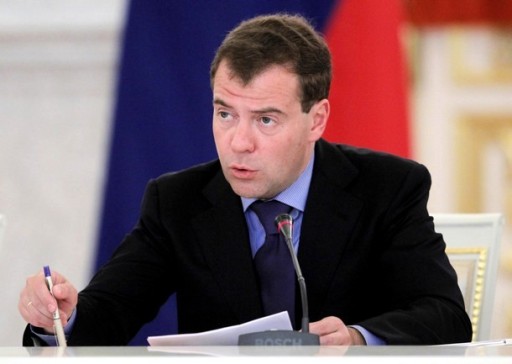
Russia's President Dmitry Medvedev

October 28, 2010 (KATAKAMI / KREMLIN.RU) --- Russian President Dmitry Medvedev sent his condolences to Indonesian President Susilo Yudohoyono following the earthquake and tsunami in Indonesia.
The message reads, in part :

“I was profoundly saddened to learn of the great loss of life and the destruction caused by the earthquake and tsunami in Indonesia.

I express my sincere sympathy and share the Indonesian people’s pain and grief. Please pass on my condolences to the victims’ families and my wishes for a speedy recovery to all who were injured.
If necessary, we are ready to help your country overcome this disaster.”

10/27/2010

President Yudhoyono to visit Mentawai on Thursday


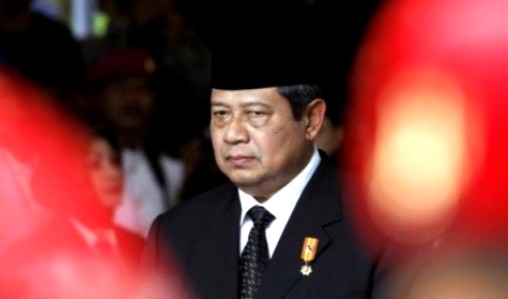
Indonesian President Susilo Bambang Yudhoyono

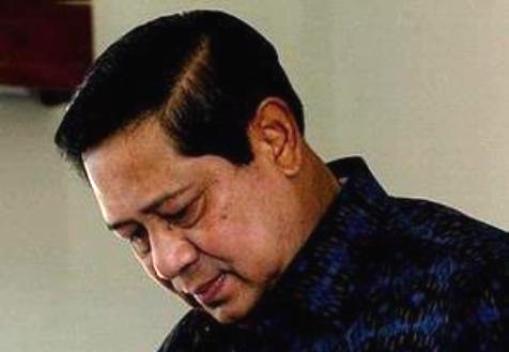
October 27, 2010 (KATAKAMI / THE JAKARTA POST) --- President Susilo Bambang Yudhoyono will visit Mentawai at 9 a.m. on Thursday to meet with tsunami victims.

Yudhoyono is now in Padang, West Sumatra.

Presidential spokesman Julian Aldrin Pasha said Wednesday Yudhoyono will not go to Yogyakarta, but he asked Vice President Boediono to do so.

"President would return to Hanoi to attend the ASEAN chairman handover ceremony as Indonesia will take over the leadership from Vietnam," he said as quoted by kompas.com

Monday's tsunami has killed 311 people in Mentawai.

Gubernur Sumbar : KorbanTsunami Mentawai Yang Meninggal Dunia 311 Orang

President Dmitry Medvedev has license to drive Kamaz truck


Medvedev has license to drive Kamaz truck

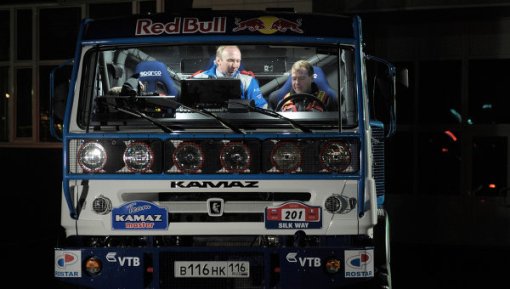
October 27, 2010 (KATAKAMI / RIA NOVOSTI) --- Russian President Dmitry Medvedev has a license to drive a Kamaz truck, a Kremlin spokeswoman said on Wednesday.

"The president, who is seriously into driving, has the special license necessary for truck driving," Natalia Timakova said.

On Tuesday, during his visit to the Kamaz plant in Tatarstan, Medvedev took a test drive of a vehicle set to participate in the next Dakar rally in January 2011. The president drove 30 kilometers to the airport.

His navigator was the driver of the Russian Dakar rally team and record holder at the rally, Vladimir Chagin.
The president gave medals to the drivers, navigators and mechanics of the team at a workshop in Naberezhnye Chelny, Tatarstan's second city.

"I have handed out state awards in various situations, but never inside a Kamaz," Medvedev joked.
ASTRAKHAN, October 27 (RIA Novosti)

We've been in Afghanistan, we didn't like it - Russia's NATO envoy


We've been in Afghanistan, we didn't like it - Russia's NATO envoy

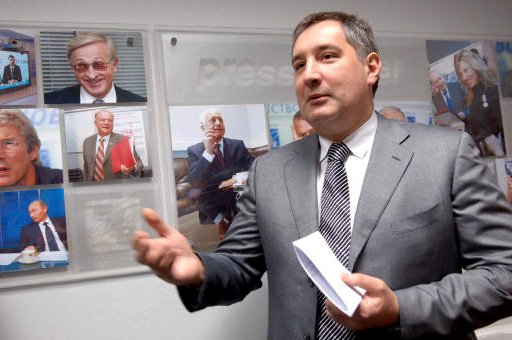
October 27, 2010 (KATAKAMI / RIA NOVOSTI) --- Russia's envoy to NATO on Wednesday dismissed reports that Russian troops could be sent back to Afghanistan two decades after the Soviet Union's Red Army was forced out by U.S.-backed mujahedeen.

"We've already been in Afghanistan and we didn't like it much," Dmitry Rogozin told RIA Novosti.
The UK newspaper The Guardian said on Tuesday the proposal was on the table ahead of a landmark Russia-NATO summit in Lisbon next month.

The paper said Moscow and Brussels were discussing joint initiatives including "the contribution of Russian helicopters and crews to train Afghan pilots, possible Russian assistance in training Afghan national security forces, increased co-operation on counter-narcotics and border security, and improved transit and supply routes for NATO forces."

"Maybe someone wants Russia to supply cannon fodder to Afghanistan," Rogozin went on.

The Soviet Union was involved in a bitter decade-long conflict in Afghanistan from 1979 to 1989. A million Afghan civilians and fighters are estimated to have lost their lives during the fighting. Some 15,000 Soviet soldiers also perished, and the return of Russian soldiers to the country would also be extremely unpopular in Russia.

The war had a profound impact on the Soviet Union, and has been cited as one of the key factors in the collapse of the Soviet Union in 1991.

Rogozin also said that Russia-NATO cooperation in Afghanistan consisted of training for Afghan and Pakistan police involved in the fight against drugs, transit and "the implementation of the so-called helicopter package."

Russia is competing for a U.S. tender to supply Mi-17 helicopters to Afghanistan.

Russian crews will train Afghan pilots, but not in Afghanistan, Rogozin said. He also said that the issue of improved transit arrangements "has never been raised."

BRUSSELS, October 27 (RIA Novosti)

Former Argentine President Nestor Kirchner dies


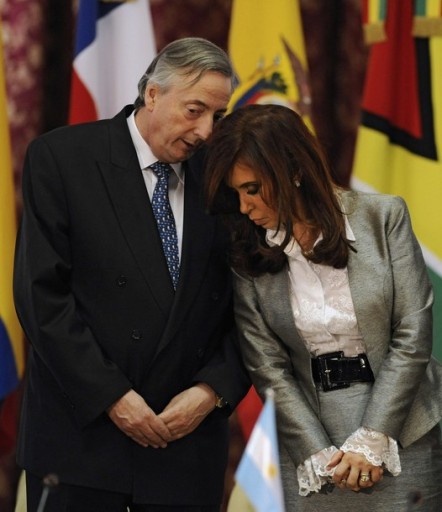
UNASUR general secretary Nestor Kirchner (L) talks to his wife, Argentine President Cristina Fernandez de Kirchner as they pose for a family picture before the beginning of an extraordinary UNASUR summit in support of Ecuadorean President Rafael Correa in Buenos Aires on October 1, 2010 (JUAN MABROMATA/AFP/Getty Images)


October 27, 2010 (KATAKAMI / BBC) --- Argentina's former president, Nestor Kirchner, has died, after reportedly suffering a heart attack.

Mr Kirchner, 60, who had been operated on in September for heart problems, died in the southern Argentine city of El Calafate, local media reported.

His wife, Cristina Fernandez de Kirchner, is the current president of the country.

Mr Kirchner served as president from 2003 to 2007, and was being tipped to stand for election again in 2011.

He had remained a member of the Argentine congress and secretary general of the South American regional grouping, Unasur.

But he had been dogged by ill health and had undergone two major operations in 2010 alone.

In February Mr Kirchner had surgery to remove a blockage in his carotid artery, which carried blood from the heart to the brain.

He had a second operation in September, when routine tests revealed a blocked coronary artery.

Mr Kirchner was given an emergency angioplasty after complaining of numbness in his legs.

President Yudhoyono cuts short his Vietnam visit


Indonesian President Susilo Bambang Yudhoyono

October 27, 2010 Hanoi, Vietnam (KATAKAMI / ANTARA) - Visiting Indonesian President Susilo Bambang Yudhoyono has to cut short his working trip and return to Jakarta on Wednesday.

The president made the decision to return to Indonesia following a volcanic eruption in Central Java on Tuesday and earthquake-triggered tsunami in West Sumatra on Monday.

The president was forced to immediately return to Jakarta to monitor for himself the direct impact of the two separate natural disasters on the local people.

"President Yudhoyono has made up his mind to return to Indonesia on Wednesday," Minister/State Secretary Sudi Silalahi told the newsmen in Hanoi, Vietnam, earlier in the day.

Sudi said the president was scheduled to directly head to Mentawai, West Sumatra, to obtain the first hand information about Monday`s powerful earthquake which was followed by a deadly tsunami.

President Yudhoyono and his entourage arrived in Hanoi on Tuesday evening for a state visit to attend the 17th Asean Summit.

The president`s party included the Chief Economic Minister Hatta Rajasa, the Minister/State Secretary Sudi Silalahi and the Foreign Minister Marty Natalegawa.
Yudhoyono would start his activities in Vietnam on Tuesday by paying a state visit, which was at the invitation of Vietnamese President Nguyen Ming Triet.

The president made the state visit in connection with the 55th anniversary of diplomatic relations between Indonesia and Vietnam, which fall on December 30, 2010.

According to the presidential spokesman for foreign affairs Teuku Faizasyah, the visit would focus on increasing the cooperation in the fields of politics, law, security, economy, development, social and tourism.

But at about 7.55 on Wednesday morning, the members of the presidential entourage were asked to pack their belongings and get ready to leave the hotel.

Consequently the Indonesian head of state had to cancel a number of his agenda in the visit to Hanoi, Vietnam.(*)

President Yudhoyono to return early


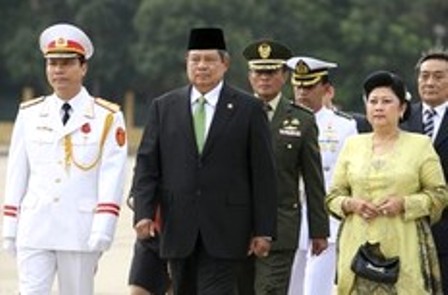
Indonesia's President Susilo Bambang Yudhoyono (C) and his wife Kristiani Herawati (R) attend a wreath laying ceremony at Ho Chi Minh Mausoleum in Hanoi October 27, 2010. Yudhoyono is in Vietnam for the 17th ASEAN Summit that will take place from October 28 to 30. (Getty Images / REUTERS/Luong Thai Linh/Pool )

October 27, 2010 HANOI (KATAKAMI / THE STRAITS TIMES)  - INDONESIAN President Susilo Bambang Yudhoyono, in Hanoi for an Asean summit, will return home early on Wednesday because of deadly natural disasters at home, an Asean source said.

'It's true. At midday' he will leave, the source told AFP.

Dr Yudhoyono arrived in Hanoi on Tuesday for an official visit with Vietnamese leaders before the summit of the Association of South-east Asian Nations (Asean) on Thursday, and the follow-up East Asia Summit Saturday with six regional partner nations.

A 7.7-magnitude quake that struck late on Monday near the Mentawai Islands off Sumatra island triggered a tsunami that has killed at least 112 people and left hundreds more missing.

Another 25 people have died on Java island after the Mount Merapi volcano erupted. --


AFP

Indonesia : Journalist died in Mount Merapi


Yuniawan Wahyu Nugroho (Wawan)

October 27, 2010 (KATAKAMI / THE JAKARTA POST) --- Yuniawan Wahyu Nugroho (Wawan), an editor with the vivanews.com news portal, was killed while conducting reportage at the erupted Mount Merapi in Yogyakarta on Tuesday night.

Vivanews.com reported that Dompet Dhuafa Disaster Management Center found Yuniawan dead near a house, which belongs to Mount Merapi guardian Ki Surakso Hargo aka Mbah Maridjan, in Kinahrejo hamlet, Umbulharjo village, Cangkringan, Sleman.

Yuniawan was allegedly killed by hot ash which spewed from the erupted volcanic mountain.

Yuniawan was scheduled to interview Mbah Maridjan on Wednesday.

Mbah Maridjan was also reportedly died from the hot ash. However, no official confirmation was available.

Indonesia : Mbah Maridjan, Mount Merapi guardian’s death confirmed


Ki Surakso Hargo (Mbah Maridjan)

October 27, 2010 (KATAKAMI / THE JAKARTA POST) --- Presidential special staff for disaster mitigation Andi Arief confirmed Wednesday the death of Mount Merapi guardian Ki Surakso Hargo or Mbah Maridjan.

Andi said that as of 10:15 a.m., the Tuesday’s eruption had claimed 26 casualties and injured 13 people. Mbah Maridjan was among 19 casualties that had been identified.

Mbah Maridjan was found dead at his house in Umbulharjo village, Cangkringan of Sleman, on Wednesday morning, in form of sujud (kneeling with a face down on the floor during praying) and covered with collapsing walls and trees.

Indonesia Fights on Two Fronts as Tsunami, Eruption Toll Rises


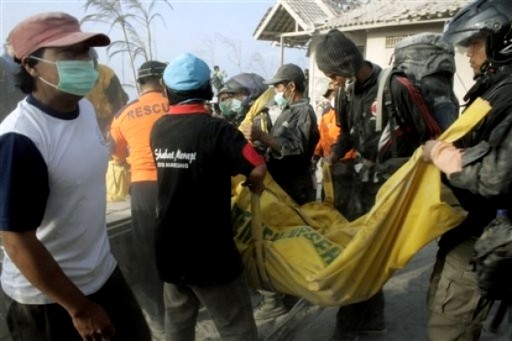
Rescuers carry the body of a victim of Mount Merapi eruption in Kaliadem, Yogyakarta, Indonesia, Wednesday, Oct. 27, 2010. A volcanic eruption and a tsunami killed scores of people hundreds of miles apart in Indonesia, spasms from the Pacific "Ring of Fire," which spawns disasters from deep within the Earth. (Getty Images / AP Photo/Slamet Riyadi)

Indonesia (KATAKAMI / THE JAKARTA GLOBE / BLOOMBERG) --- Rescuers searched for survivors of a tsunami in Indonesia’s remote west while aid workers headed for the site of a volcano eruption as the death toll from the two disasters hours apart rose to more than 130.

The toll from the Oct. 25 tsunami that hit the Mentawai Islands off the west coast of Sumatra reached 112 with 152 missing as of 10 p.m. on Tuesday night, Ade Edward, head of operations at the West Sumatra Regional Disaster Management Agency, said. At least 24 died in the eruption of Mount Merapi in Central Java.

“The areas are remote and communication is difficult,” Edward said by phone today. “Our officials over there are supposed to report at least every hour.”

In central Java, about 400 kilometers (250 miles) east of Jakarta, Red Cross Indonesia workers are treating people who were burned or otherwise injured after the Mt. Merapi volcano erupted three times, spewing superheated ash into the air and killing at least 24 people.

“We need more masks, tents, and medicine to treat burn injuries,” Oka Wahid, a spokesman at Red Cross Indonesia’s Yogyakarta branch, said by phone. “We also need food because more people from villages near Merapi are coming down to evacuation point.”

There were 1,360 people from five villages heading to the evacuation center in Yogyakarta, he said.

The 7.5-magnitude temblor struck the Kepulauan Mentawai region of Indonesia, about 240 kilometers (150 miles) from Padang, the provincial capital of West Sumatra, and 640 kilometers from Singapore at 9:42 p.m. local time Oct. 25, the US Geological Survey said. The quake triggered a 3-meter (10- foot) tsunami that that reached 400 meters inland, the agency said yesterday.

A 7.6-magnitude earthquake in the same area in October 2009 left more than 1,000 people dead in Padang, many of whom were buried in mudslides and the rubble of collapses buildings. Less than a month earlier, a magnitude-7 temblor south of Java on Sept. 2 left 82 people dead.

A tsunami generated by a magnitude-9.1 earthquake off northern Sumatra in December 2004 left about 220,000 people dead or missing in 12 countries around the Indian Ocean.

Mount Merapi death toll rises to 25


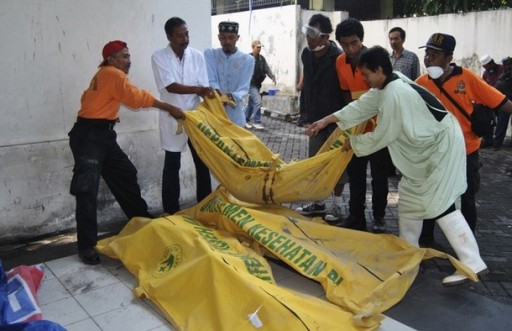
Paramedics lay out the bodies of victims of the Mount Merapi eruption at a a hospital in the ancient city of Yogyakarta October 27, 2010. Mount Merapi, one of Indonesia's most active volcanoes, spewed out clouds of ash and jets of searing gas on Wednesday in an eruption that has killed at least 25 people and injured 14. (Getty Images / REUTERS/Stringer )

Yogyakarta (KATAKAMI / ANTARA) - The number of dead victims of Mt Merapi eruption rose Wednesday morning from 19 to 25, a health official said.

Public Relations officer of Dr Sardjito hospital in Yogyakarta, Heru Trisno Nugroho said on Wednesday that dead victims and the injured ones were now at the hospital.

He said the dead victims at Dr Sardjito hospital totaled 25 and those suffering from burns were recorded at 15.

Head of Sleman Health Service Mafirindati said earlier that all of the dead victims were found when rescuers combed the nearest village to the Indonesian most active volcano.


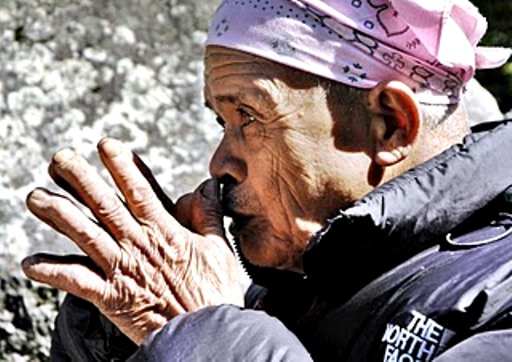
Ki Surakso Hargo, popularly known as Mbah Maridjan


It was earlier reported that fifteen people were dead in Mount Merapi`s hot clouds on Tuesday with four of them found inside and 12 others outside the home of Mt Merapi caretaker Ki Surakso Hargo, popularly known as Mbah Maridjan.

Mbah Maridjan was also killed in the disaster.

Mount Merapi erupted on Tuesday evening, spewing hot clouds several times.

"Between 5.02 p.m. and 5.34 p.m. the volcano spewed hot clouds four times and right now hot clouds are coming out of the volcano again and again," Head of the Vulcanology and Geological Disaster Mitigation Centre Surono said.(*)

15 killed as Indonesia volcano spews hot ash


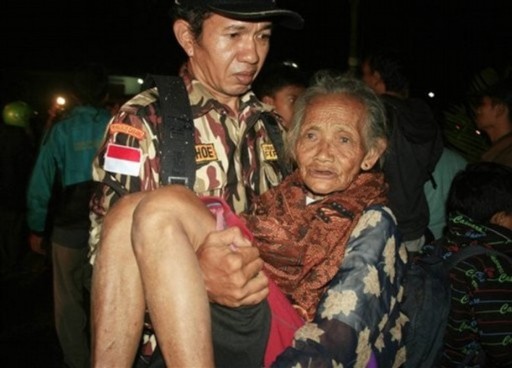
A rescuer carries an elderly woman to a temporary shelter as she is evacuated from her home on the slope of Mount Merapi, in Pakem, Yogyakarta, Indonesia, Tuesday, Oct. 26, 2010. Indonesia's most volatile volcano started erupting Tuesday, after scientists warned that pressure building beneath its dome could trigger the most powerful eruption in years. (Getty Images / AP Photo/Slamet Riyadi) 
 
Jakarta, Oct 26 (KATAKAMI / Indiatalkies.com) – At least 15 people were killed and 13 injured Tuesday after a volcano on Indonesia’s Java island erupted, spewing clouds of hot ash, local television reported.

Metro TV said thousands of people were moved by trucks and cars after Mount Merapi started spewing hot ash and volcanic rocks just before dusk, a day after authorities upgraded an alert status to the highest level.

Television footage showed residents, most wearing masks, being taken away in trucks with windscreens covered by dust.

‘This is an initial phase of an eruption,’ said Subandrio, head of the Volcanic Technology Development and Research Centre in Yogyakarta, who like many Indonesians uses only one name.

Metro TV reported that 15 badly burned bodies were found near the house of Mbah Marijan, the man known as the keeper of the mountain, who had refused to leave his home.


http://media.vivanews.com/thumbs2/2010/10/26/98451_yuniawan-wahyu-nugroho--wartawan-vivanews_300_225.jpg
Yuniawan Wahyu Nugroho ( VIVANews.Com)


It said one of them was a journalist ( Yuniawan Wahyu Nugroho from VIVANews.COM) who climbed the mountain to interview Marijan.

An Indonesian Red Cross official said 13 people were injured and were being treated in a hospital.
Officials could not be reached immediately to confirm the report of deaths.

Vulcanologist Surono said three explosions were heard at around 6 p.m. (1100 GMT) and Merapi spewed clouds of black smoke 1,500-metre into the sky.

On Monday authorities began moving children and elderly people to some of the 60 emergency shelters after scientists upgraded the alert status as lava flowing down the cone’s slopes reached 4.5 km.

Tents, blankets and plastic sheeting were distributed to dozens of evacuation points around Yogyakarta and Central Java provinces, said Arief Setyo Hadi, an official with the Indonesian Red Cross.

Officials estimated up to 40,000 people were living in the endangered areas.

The 2,968-metre volcano last erupted in 2006, killing two people. Its most deadly eruption on record occurred in 1930 when 1,370 people were killed.

At least 66 people were killed in a 1994 eruption.